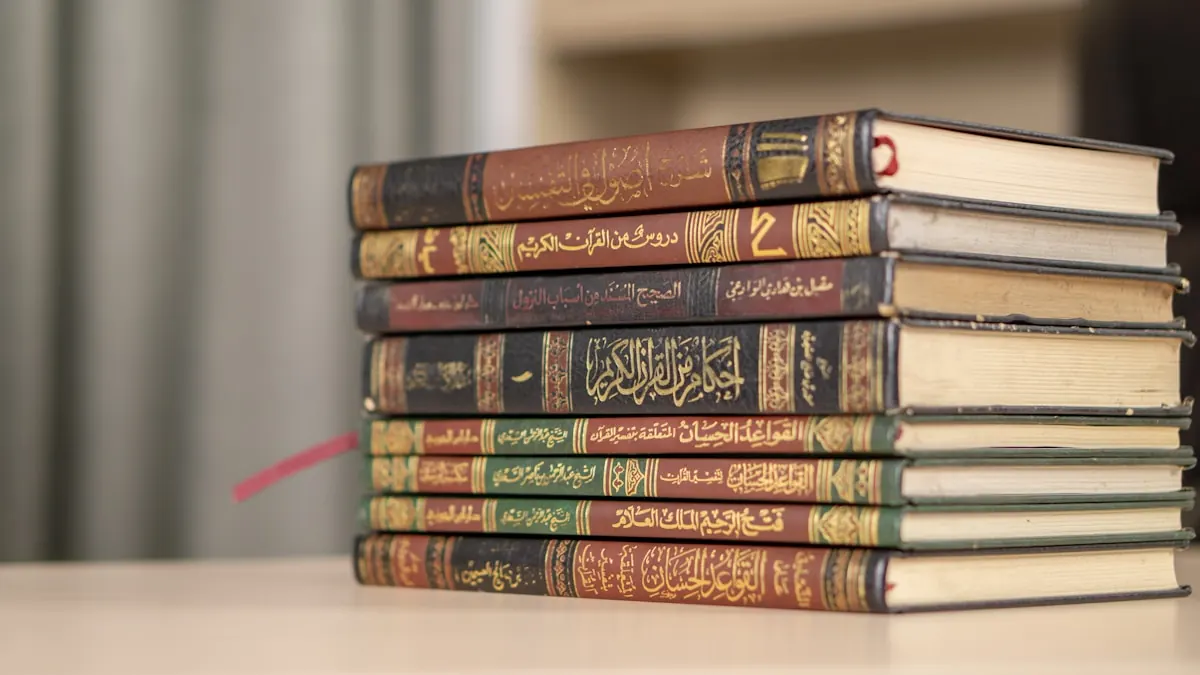
Find the right starting point
Begin with the question you want the course to answer. You might want to understand passages you already recite or follow the thread of a longer section. Those needs can lead to different material. Identify the translation being used and keep the edition with your notes, so a later question refers to the actual wording discussed rather than a remembered fragment.
Turn explanation into a useful learning task
A translation renders meaning into another language; it is not identical to the Arabic text. Different wording choices can raise useful questions. When a phrase feels unclear, look at its surrounding passage and bring it to the teacher. Avoid assuming that an isolated English sentence contains every detail needed for an independent interpretation.
Build understanding that lasts beyond the lesson
Recurring vocabulary can make reading more attentive, but a list of word equivalents is not the same as sentence understanding. Keep examples beside vocabulary notes. Questions about detailed context or personal religious judgments may require Tafseer study or qualified scholarly guidance. Recognising that boundary helps a translation lesson remain useful without claiming more than it provides.
When two translations use different words
If two translations render a phrase differently, keep the exact passages and editions together. Start by asking what each wording is trying to communicate rather than assuming that the difference proves one is simply careless. A teacher can help explain the relevant language and indicate where further source-based study is needed.
Write down the point clarified and avoid combining fragments from several editions into a new quotation of your own. When sharing an explanation, distinguish the translation from the teacher’s comment. This keeps the reference clear and helps a later question return to the actual text. Comparing wording can deepen attention, provided it does not become unsupported independent interpretation.