
Live 1-to-1 learning
Basic Islamic Knowledge for Beginners
Create a manageable beginning in Islamic learning, with unfamiliar terms explained and room for foundational questions.
Request My Free Trial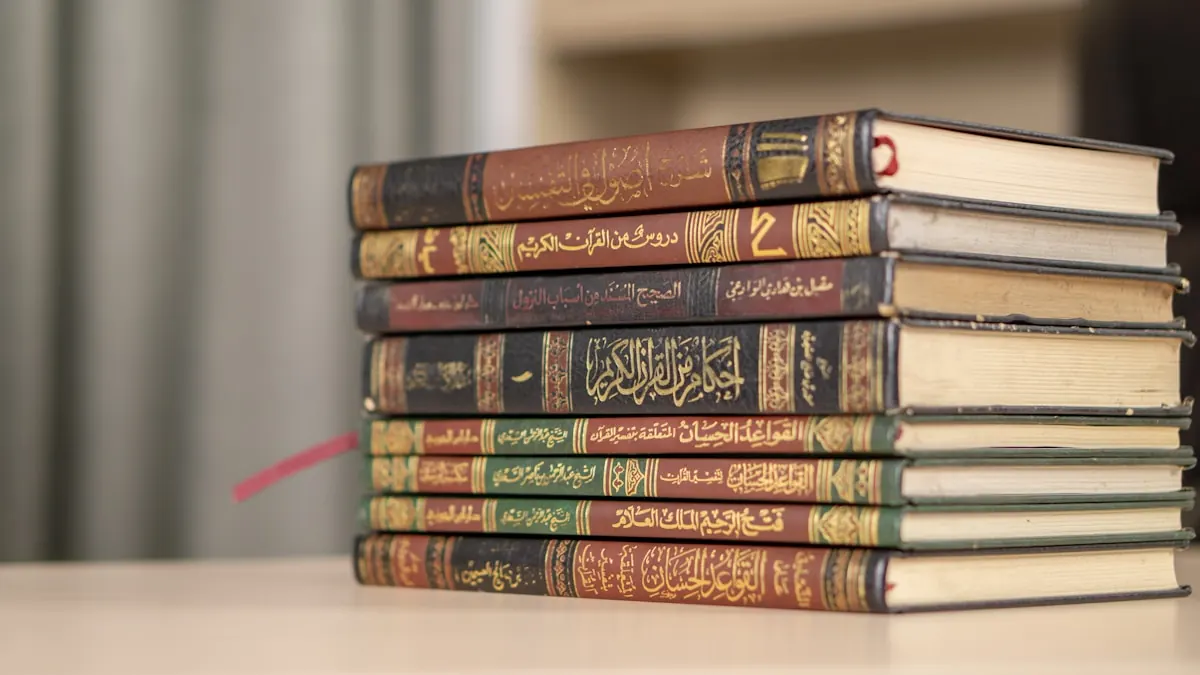
Explore this guide
Find the right starting point
A beginner can feel surrounded by language other people seem to understand already. Make a list of terms and practices you encounter and discuss what to address first. You do not need to pretend that a familiar-sounding word is clear. A focused beginning is more useful than attempting to fill every gap at once.
Turn explanation into a useful learning task
Ask how the selected topics fit together and what you should be able to explain after studying them. If an idea needs more background, pause to supply it rather than continue through a chain of assumptions. A strong introduction does not make the learner dependent on memorising unexplained phrases. It provides a basis for asking and understanding further questions.
Build understanding that lasts beyond the lesson
Keep the original reference when a shared message raises a religious question. A short clip may leave out details that matter. Your notes can record the question, the explanation discussed and what remains uncertain. Revisit that list as related topics become clearer. Introductory learning is not a qualification to issue judgments on complex personal cases.
When every new answer introduces another unfamiliar term
Pause and identify which term prevents the explanation from making sense. Ask the teacher to define it in ordinary language and show how it relates to the original question. There is no need to keep accepting new vocabulary in the hope that all of it will become clear at the end of the course.
A useful notebook can keep the original question on one line, the clarified meaning below it and a separate space for further study. That structure makes it easier to return without confusing an introductory answer with an exhaustive one. It also helps the teacher see where the learner needs background before moving to the next topic.
A little clarity before you begin
Your questions, answered.
Explore a topic or search the answers below.
Common questions
Who is Basic Islamic Knowledge intended for?
This pathway is for learners who want a clear starting point for foundational Islamic learning. The actual topics and depth should be agreed from the learner's prior knowledge and questions.
Is this pathway only for young children?
No. An adult with limited prior study may also need a foundational explanation. Age alone does not determine familiarity with the subject.
How does it differ from broader Islamic Studies?
Basic Islamic Knowledge emphasizes an introductory starting scope. Broader Islamic Studies may explore topics in more depth, but the distinction should be confirmed in the agreed plan.
What might the first foundational lesson discuss?
The first lesson can identify familiar ideas, unfamiliar terms and the learner's immediate questions. It should not assume a complete background simply because some words are recognized.
Can someone ask very simple questions here?
Yes. State what is unclear without pretending to know the expected vocabulary. Clear foundations depend on identifying uncertainties honestly.
Which beginner book will be used?
The teacher must confirm the material and edition. This page does not declare every book shown in website photography to be part of the syllabus.
Can this course provide individualized religious advice?
A general introductory lesson is not a substitute for qualified advice on a personal situation. Ask where such a question should be directed.
How should progress in foundational knowledge be checked?
Ask the learner to explain an idea simply and distinguish it from a related one. Memorized wording can be useful but is not the only evidence of understanding.
Start with a conversation
A small first step.
A meaningful learning journey.
Meet your teacher, explore your starting point, and experience live 1-to-1 learning with three free introductory classes, scheduled by agreement.